Digby Reflects further on being an oral historian (3)
Oral Historian is an Ancient Calling, the Essential Craft, my Dream Job: and all they want to read about is politicians
I wish now that I’d kept copies of all my transcripts and summaries, for it’s quite hard to access them from Zimbabwe, and expensive to copy, and virtually impossible to do so from Britain. As I think of those three years snippets come back into my head, useless on their own. And oddities. I remember a mixed-race man who’d won the State Lottery and built his ideal country residence, only to find that the nearby farmers shunned him, racism reinforcing a suspicion of outsiders; he cut a sad figure in his now dilapidated manor. And near Bulawayo, on the outskirts of an African suburb, lived a wildly eccentric white bodybuilder, once Mr Rhodesia, showing me his abs and sleeve busters, in formidable shape for 80-odd. His home was unsignposted and I found myself lost in the township, rarely visited by Europeans; I was told, with a knowing grin, exactly where he dwelt; I wondered if he felt safe but of course he did: “During the riots I sat on my verandah and watched.”
I realised I personally knew some people, my own grandparents apart, worth interviewing, friends or friends of friends. But I didn’t want to spit in my own back yard, as it were. My aunt’s lodger, a born storyteller, wrote witty letters to the newspaper, denigrating the government and extremist opinion, a sort of “Disgusted” of Tunbridge Wells (does that stereotype from the 1950s still ring a bell?). At the other end of the political spectrum was my mother’s oldest friend, a onetime secretary of the Dominion party – and her astonishing mother, who lived till one hundred (when her hair was still jet black) in a pretty basic farmhouse: it had a corrugated iron roof, an outdoor privy and no electricity. Paraffin was the fuel for any heating, coal for the stove. At some point she moved proudly into the 20th century with a generator for electricity. And in the 1950s she bought an electrical device to heat the bath water. No, not a boiler: the device took the form of a bare element at the end of the electrical lead, with a narrow grip; this was thrust straight into the water in a galvanised iron tub that had been hauled into the kitchen for the performance. She called it, using Rhodesian slang, a “cheesa” stick (phonetic pronunciation, perhaps from the Zulu kushisa, the Shona being chinopisa).
A hard life seemed good for longevity. Eschew retirement complexes and live on a farm and run it till you drop!
Latterly I approached ex-pollies. My results were better because I was dealing with a containable area of activity and each book read, each search of the records, each informant helped me to ask more searching questions and the answers were accordingly fuller. To name-drop, one was onetime Southern Rhodesian PM, Garfield Todd, charismatic, openhearted. Another the quiet and considered old Dominion Party stalwart Robert Williamson; another William Eastwood (who forgot in his eloquence to pass the sugar, thus prompting me to stop taking it in tea); a fourth the droll raconteur Stuart Aitken-Cade. Left-wing, right-wing, left, right. Impressive men (all men). Note that even in the polarised politics of old Rhodesia nonracists came from all quarters: one old soldier might be bigoted but the next open-minded, deeply respecting his black troops; a union man fresh from “home” could turn out to be a doctrinaire leftist or an unthinking racist, shielding white tradesmen from competition. Although a born liberal, I preferred the soldiers.
I was a little in awe of Todd. I’d met a lot of politicians and I met more in Australia at the NSW Parliamentary Library, and in those years, long before Trump, it was part of their trade to be charming: even if you’re the only guy around a politician will turn on the charm. But Todd was in a league of his own. His charisma could turn round a back veld audience from sullen reception to rousing ovation – the aura didn’t necessarily last, of course. He was in the same bracket as Gough Whitlam, Bob Hawke or Paddy Ashdown, bigger than life.
I clashed with some Australian historians on the topic of oral history. To grossly oversimplify, I believed my job was to ascertain facts, while the new wave of historians believed that to do so wasn’t important because myths did more to shape attitudes. I was comparing written accounts with oral and they were more interested in the unwritten stuff, which of course changes every time we dig it out (and it forms the basis for our rationalisations).
Clearly, you should ask about African oral history: although groundbreaking, my friend Dave Beach, when he used oral history, had to employ an interpreter. I’m no linguist and, a white civil servant asking questions, I had no entrée.
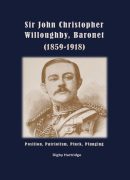
Digby is the author of the biography of Sir John Christopher Willoughby.

If you would like to read more about life in Rhodesia, below are some other titles:



And there is also the British South Africa Police collection