Digby Reflects further on being an oral historian (2)
Oral Historian is an Ancient Calling, the Essential Craft, my Dream Job: and here’s why it wasn’t perfect
I served between 1972 and ’75 as Oral Historian at the National Archives of Rhodesia I made a slow start to actually interviewing anyone as I tried to find out about the skills required. Meanwhile. publicity brought a long list of “pioneers”, older white persons. Then the need to research the first subject’s life and circumstances. My boss told me to get cracking. Thus I was propelled out, learning on the job, with never as long as I wanted with each interviewee. And, as a consequence of sanctions, tapes were scarce: interviews were laboriously transcribed and the precious tapes reused (so you’ll never hear the voices, their accents, their dated speech patterns); shorter sessions I wrote up, trying to get the sense and flavour but rarely able to put down phrases verbatim (and the oral historian knows that by his very nature as a human being he’s corrupting the text as he writes). Excuses, excuses. I don’t know if I recorded much of value to History but I did meet some wonderful people…
My first interview was with a chap called Gilbert, who’d won the hundred-yard dash in the first athletics championship in Bulawayo after the Occupation, 80 years before. It led me to associate athletics with longevity, and certainly hard work did none of the old stagers much harm. But I’m afraid I remember little else Gilbert said and the accounts of others merge one into another and with published stories, so this will be patchy. Sometimes a fascinating nugget of information, frequently oft-repeated commonplaces or myths, sometimes evident inaccuracies.
First, my most misleading informant, to use the American term. I’d knocked loudly and tried the door handle, walked uncertainly through the remains of a garden where round to the back grew untended fruit trees, naartjie, peach and mango. And on the horizon a cloud of dust was moving and growing and with it came an old battered Peugeot bakkie, and Mrs Kersey (nom de informateur), peering up through the steering wheel. She climbed down painfully, almost a duplicate of Queen Victoria, height and clothes and stern visage. She ushered me into the homestead, whipped up some tea and down to business – but not before proudly demonstrating an upright armchair that demounted to reveal a beautifully embroidered cover over a fine commode. She told the story of the murder of little children by barbarous Ndebele rebels in 1896 just as if she had witnessed it herself – but it could only have been her mother who’d told the apocryphal tale.
One pioneer woman I could hardly speak to alone, for the family felt bound to gentrify her responses. I wondered why they’d responded to the appeal for old timers to come forward, for they sat beside her in the lounge and in the dining room and, when she did manage to trot out her piece, apologised for her fanciful falsifications. But I’d done my research and with some satisfaction I told them, “No, she remembers it well,” and much of it’s very well corroborated.
An old boy I interviewed near Enkeldoorn (Chivu) had come up with one of the early Boer treks. He said, and I believed him, that he was in his late teens before he saw a car or a railway train. The previous night on his little TV he’d seen a crackly news item about an American spacecraft landing on the Moon. He laughed and said he wasn’t fooled: the whole thing was faked. So in a house in the bush on 21 July 1969 I first heard from the lips of a near-centenarian one of the most enduring conspiracy theories.
And I have a photograph of my interviewing the blind daughter of a missionary, Jessie Lloyd, warm and serene, the very epitome of “they threw away the mould”. More galling was the Cornish miner, over a hundred years old, thrust upon me before I could look into the mining records and exiting accounts, a PhD’s-worth of study. Later the internal affairs officer who was hurrying me up was himself retired and spent a month with him, and that’s when you get the best results. He got them.
Most poignant interview: I spoke to the brother of my grandfather’s mining partner and thrilled at the direct connection 70 years on. And, though he could say more about his brother, he did take the trouble to write out and sent me afterthoughts, every scrap of information he could dredge up on Grandpa.
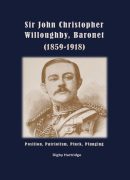
Digby is the author of the biography of Sir John Christopher Willoughby.

If you would like to read more about life in Rhodesia, below are some other titles:



And there is also the British South Africa Police collection